

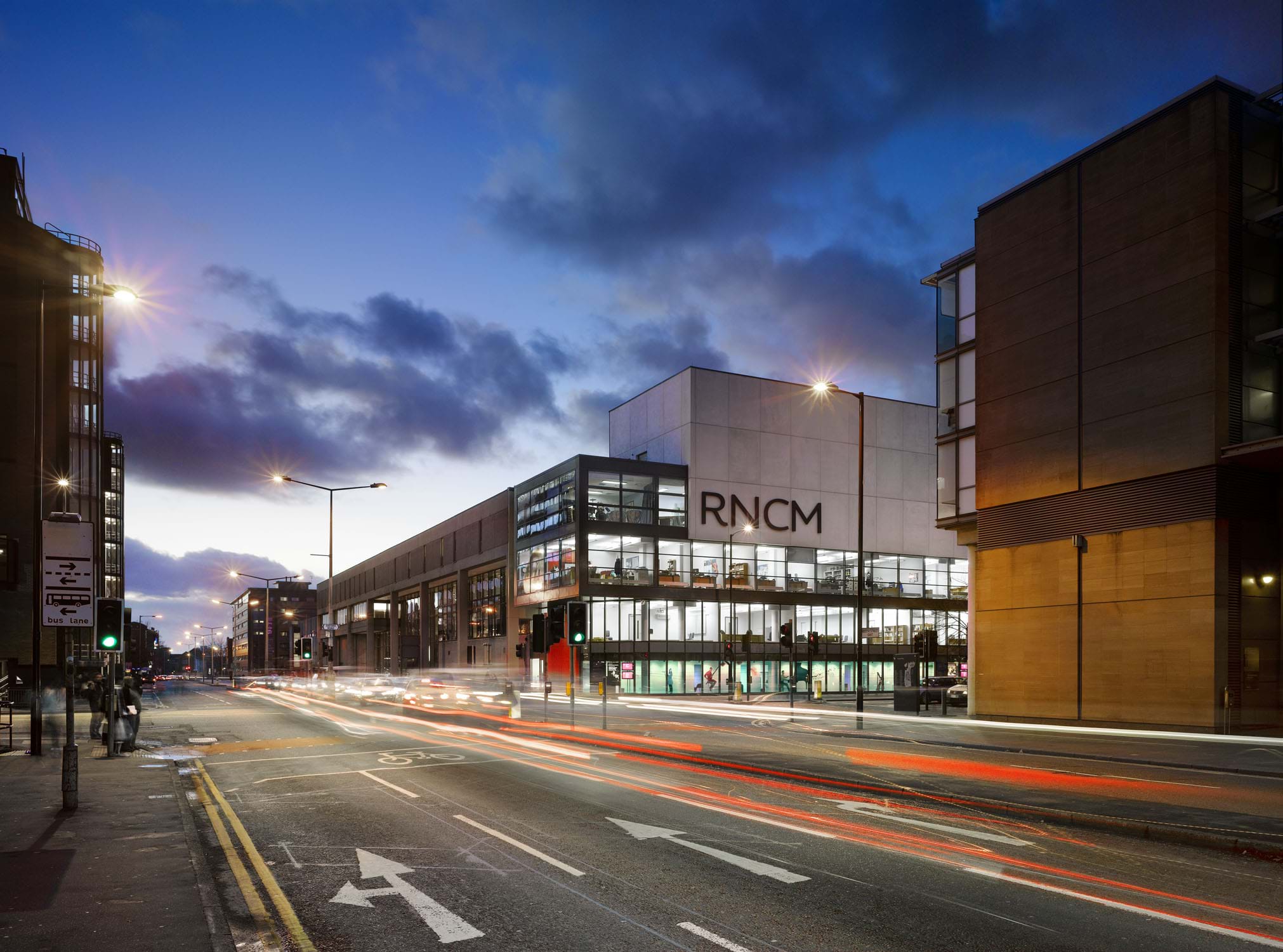
Nexer's Camp Digital in Manchester
Finally made it down to Manchester for Camp Digital. The team at Nexer (Cat, Chris, Shaun) have been running this event for years and the fact that they are so invested in long-term growth and development, and that their work environment is rich with emotional safety sort of gives this event a special caring vibe:-)
All the talks were recorded and will be posted in the archive soon. It’s worth taking a look even before this year’s events show up as there are some really brilliant earlier talks there (Lou Downe on why services fail back in 2024 is a favourite).
I didn’t bring a laptop and tried to leave my phone in my pocket, but here are some moments or ideas that really stood out for me…
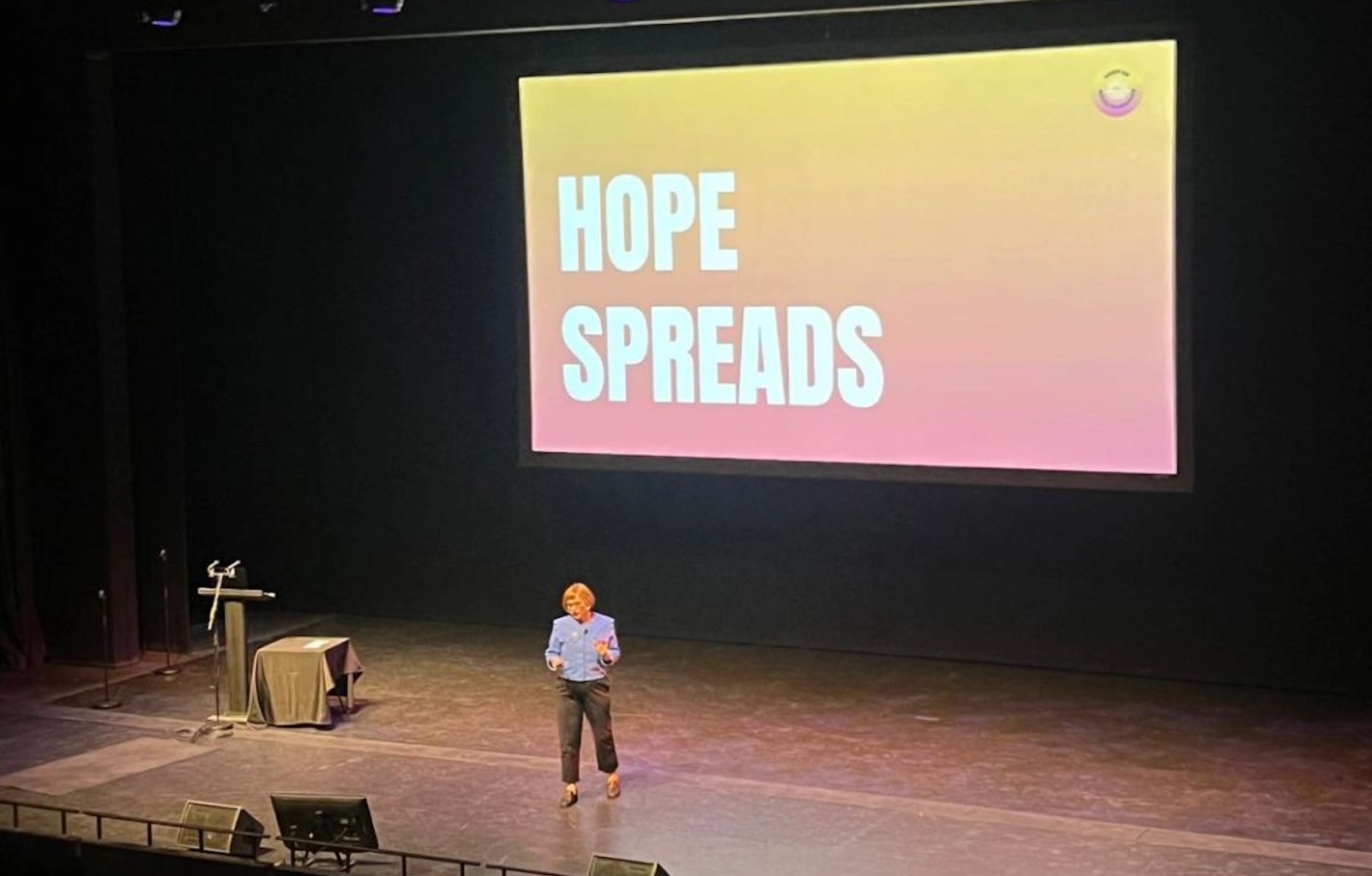
Rachel Coldicutt on hope
- Reality has been distorted and problems hidden by technology giants operating at a scale that makes accountability almost impossible. The damage is real but it is also frequently invisible — until it isn’t.
- Many of the loudest voices in tech — those doing the most complaining about how broken everything is — are white, male, and privileged. Yes…
- Hope can be dismissed as being naïve, but Rachel introduced the idea that hope is actually contagious. It only takes concerted action by a relatively small number of people for it to start spreading to those around them. You don’t need a majority. You need a committed, visible few (see her new organisation, the societyforhopefultechnologists.org).
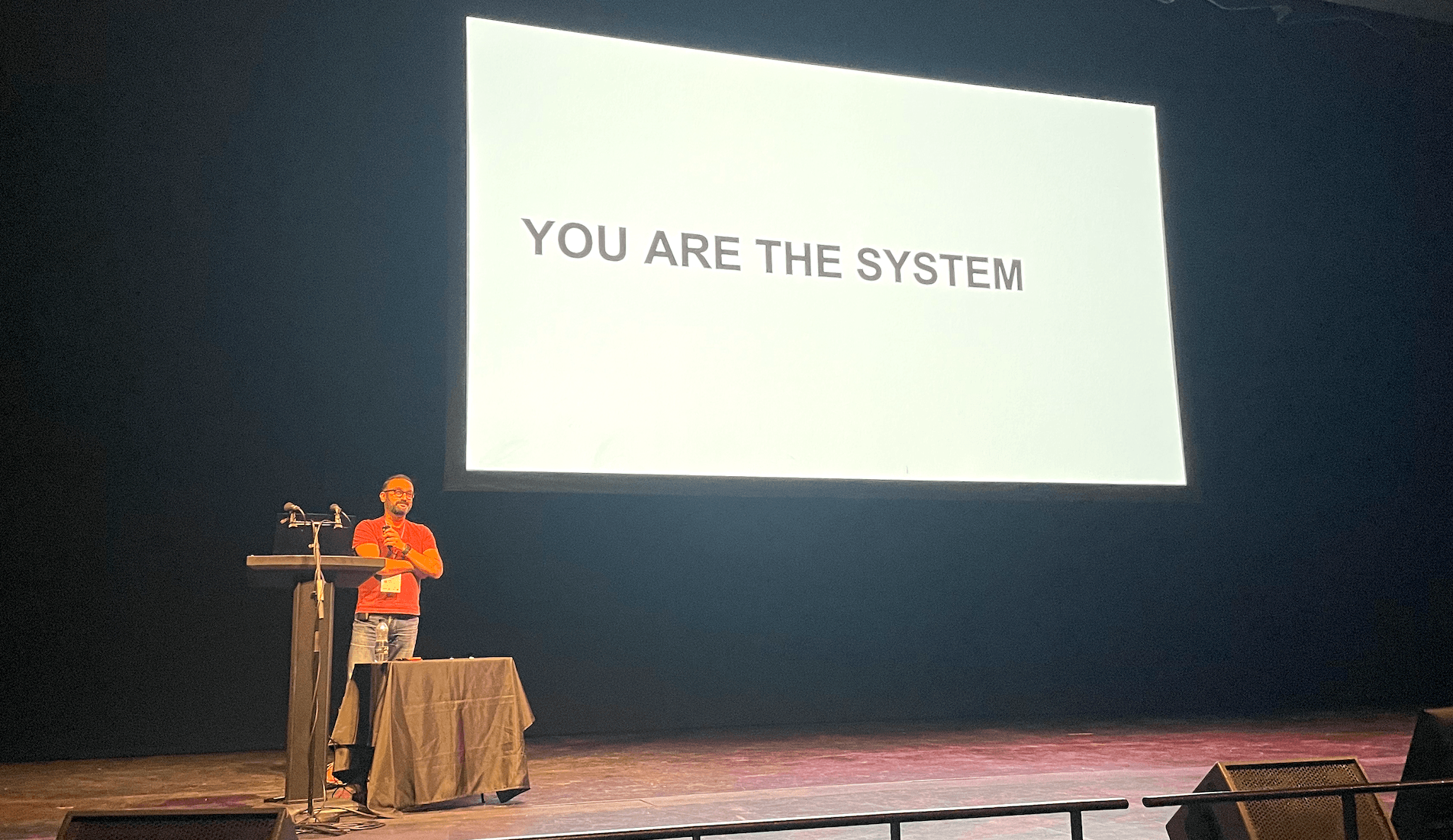
Himal Mandalia on the intersection of commitment and burnout
- When people who care step in to fix broken systems, they inadvertently teach those systems that the problem is being handled. The incentive to actually fix the underlying issue evaporates. The people absorb the dysfunction so the organisation doesn’t have to.
- This means the negative impact on the humans doing the fixing quietly compounds. The system is fine. The people are not.
- The key concept Himal introduced — and one that felt particularly relevant to strategic design practitioners — is the idea of taking responsibility without having authority. The people who care most about the work are precisely those most likely to step in and carry a burden that isn’t formally theirs to carry. They do it because they are dedicated professionals, not because anyone asked them to. Over time, that gap between responsibility and authority becomes a significant and under-acknowledged cause of burnout. I’m going to be reflecting on this over the coming months.
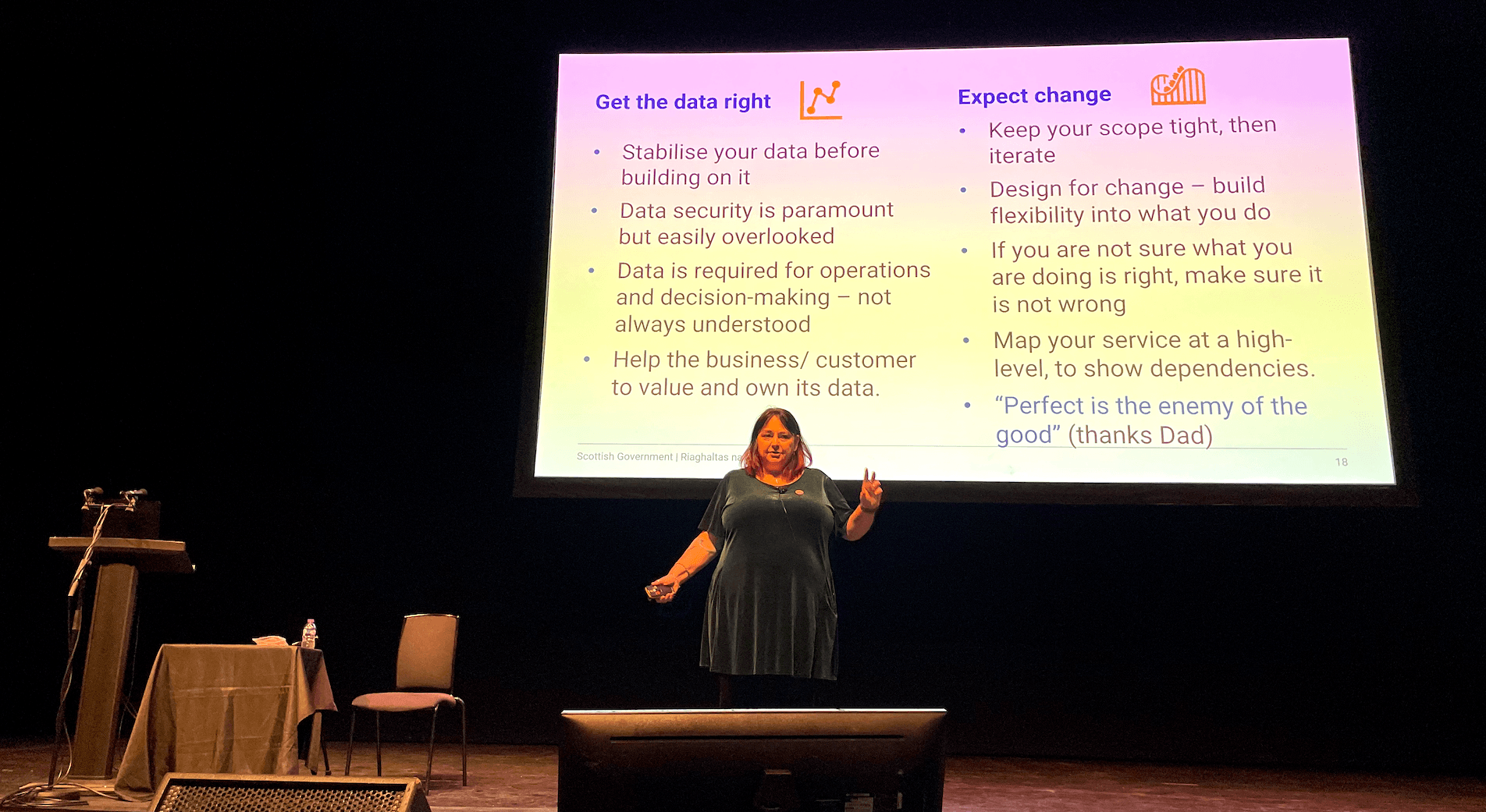
Tessa Quinn on doing the right thing against formidable odds
Tessa told us the story of Scotland’s “Super Sponsor” scheme — the intention of which was to allow Ukrainians fleeing the war to apply for a visa naming the Scottish Government as their sponsor, meaning they didn’t need a pre-arranged host.
This policy decision set Scotland apart from other host nations and simplified the process for refugees while meaningfully improving safeguarding at a moment of genuine crisis.
It’s an extraordinary story. Worth reading more on scotgov for the full picture. Several things from Tessa’s talk really hit home — to the point where I found myself unexpectedly emotional at one point (long story; involves Covid and Nicola Sturgeon).
Three things really stood out for me:
Emotional safety under pressure. The team was operating in genuinely traumatic conditions — the subject matter was war, displacement, families separated. Tessa talked about how deliberately cultivating psychological safety within the team was operationally essential. People needed to be able to say when something wasn’t working, raise doubts, flag distress — and know they’d be heard, that she had their back.
Radical adaptability. This was not a programme with a comfortable runway. It was weeks, sometimes days. The team used whatever tools, platforms, and people were to hand — patching things together in ways that would make a procurement officer weep, but that actually worked. It’s a vivid example of what’s possible when you stop chasing perfect.
Leadership as moral clarity. The Scottish government’s framing of this issue made the work almost self-motivating. People weren’t just executing a programme; they were manifesting a set of shared values.
Three very different talks, visualised though different lenses, but that orbit around a central theme of what it means to have purpose. I’m reminded how lucky we are to be doing this work:-)
Good day out in Manchester.
See also excellent write-ups (thanks Hugh for the blogroll energy!) from Adam, Hugh, Heledd, Matt, and Nicola.
What do you think?